When we prepare for a summit push, we dream of the panoramic view from the top, with bright sunshine that, depending on the time of day, lets us enjoy a pleasant moment once we're up there, and a smooth return to camp.
But a smooth return isn't always planned for; often it's simply assumed, as if that return trip were already sorted out just because we made it up, and on the assumption that no one will get stuck up high. Almost like the obvious truth in the saying that whatever goes up must come down. Most mishaps happen during the descent. Our goal shouldn't be only the summit. Every mountaineer should know that the mountain doesn't belong to us until we're back home; a summit marred by an accident won't taste the same as victory. When we start descending, our focus shifts — since our conquest is already accomplished, we let ourselves ease off a little. Most of the time the way down doesn't demand the same physical effort the climb did, although often the path becomes more technical. Sometimes it's a feeling of accomplishment that makes us let our guard down. It's exactly at that moment that our lack of attention is most likely to work against us. Of course you don't feel as fresh as you did setting out before dawn, but you need to keep your senses sharp. It's essential to understand that until you reach camp in good condition, you can't consider your adventure complete.
How do you know if you have enough left in the tank to finish the climb and then get back down?
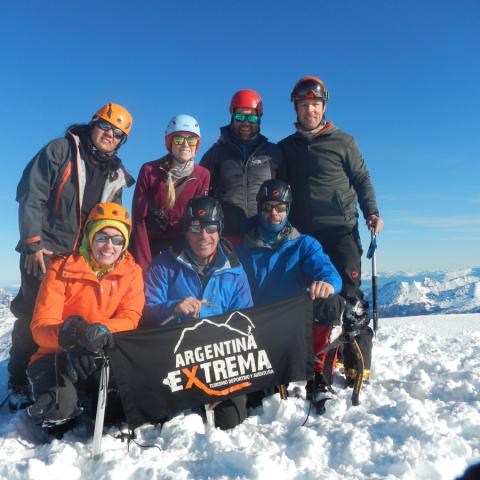
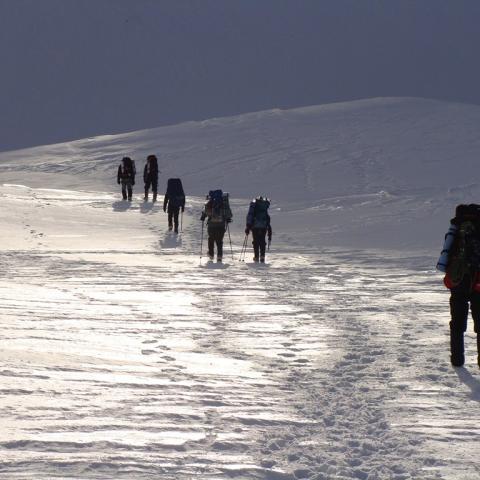
On a mountain trip to the summit of Cerro Montura, 4,956 masl, a route used by the military out of Uspallata, where from La Gloria camp you're looking at nearly 1000 meters of elevation gain to tackle the summit past midday and still make it back. A winter outing where, with the delays caused by frozen ice and having to fit crampons on a group of more than 30 people, the ascent was slowed enough that we ended up summiting (despite the recommendations) between 3 and 4 pm. We thought the hardest part had been going up; you make the effort to stay strong-headed the whole way, with the idea that once you get there, all your troubles will be cured. And the feeling of reaching the summit might resemble that, but only for a little while. Poor hydration during the climb, due to the difficulty of getting water from the frozen rivers, and extreme exhaustion, meant that one member of the group, after walking a few kilometers downhill, couldn't continue. We still had 800 meters of descent left, where not only did we need to pay close attention to the path, but nightfall added an extra complication. At the summit he'd had enough spirit left to enjoy the moment and capture it in photos… but after that, it was as if the batteries had run out on one of those toys we had as kids.
That day we learned an important lesson.
IF YOU DON'T HAVE ENOUGH LEFT TO GET BACK DOWN, THEN MAYBE IT'S TIME TO STOP GOING UP.
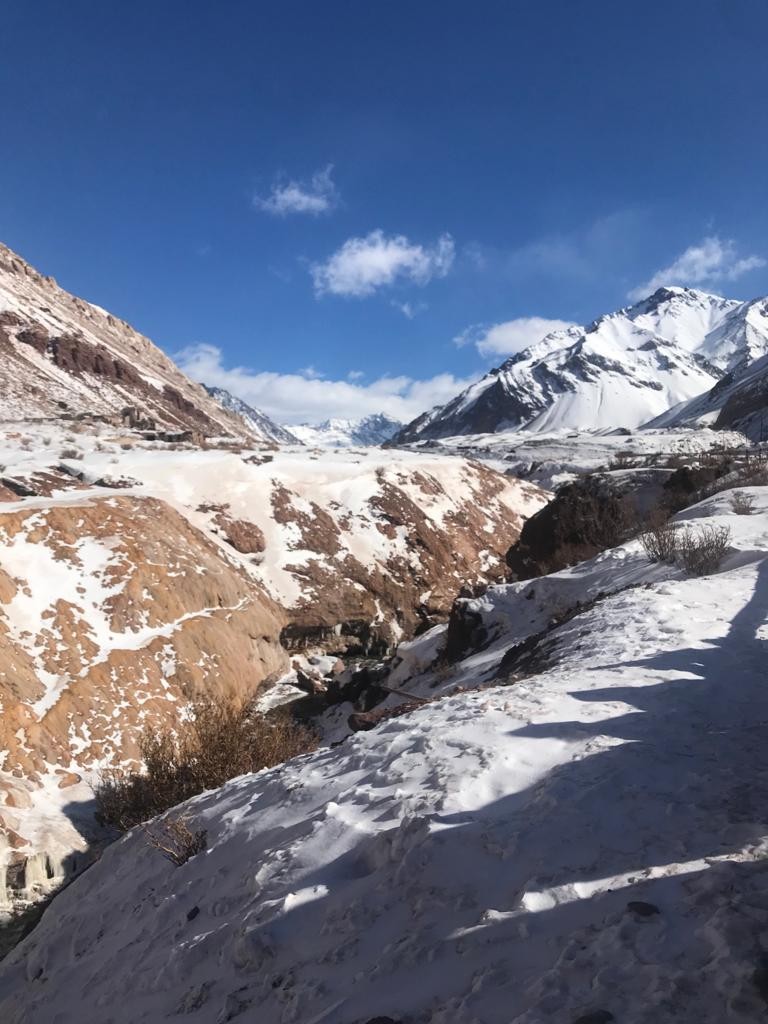
How hard is that… how do you measure it? and how do you know? how do you give up on your biggest goal on the climb?
Setting aside ego, sometimes our own worst enemy, to understand that the mountain will still be there, and that life will probably give us another shot at reaching it.
How do you recognize the symptoms of extreme exhaustion?
Fatigue:
- Memory or concentration problems.
- Sore throat.
- Headaches.
- Swollen lymph nodes in the neck or armpits.
- Muscle or joint pain.
- Dizziness that gets worse.
- Unrefreshing sleep.
The story had a good ending — he was able to get back to camp with help and recover. But right at that moment, this phrase took on real meaning
«The summit is only halfway there»
Let's normalize not reaching the summit as part of the process, and part of this art we call mountaineering, LET'S ENJOY THE JOURNEY.