When light hits the peaks at dawn or a storm closes in over the jungle, there's no second chance. In adventure photography, your gear is your visual lifeline and, at the same time, your biggest burden. After years documenting environments with extreme weather for Aex, I've learned that the success of an expedition doesn't depend on how much gear you carry, but on how you protect it and how carefully you choose it.
Below, I share the field protocol for keeping your cameras working where the weather is trying to destroy them, and how to shave off grams without sacrificing professional quality.
1. Preparation: Organization and Modularity Before Heading Out
In the wild, digging through a messy backpack is the perfect recipe for missing the shot or letting water and dirt into your lenses.
-
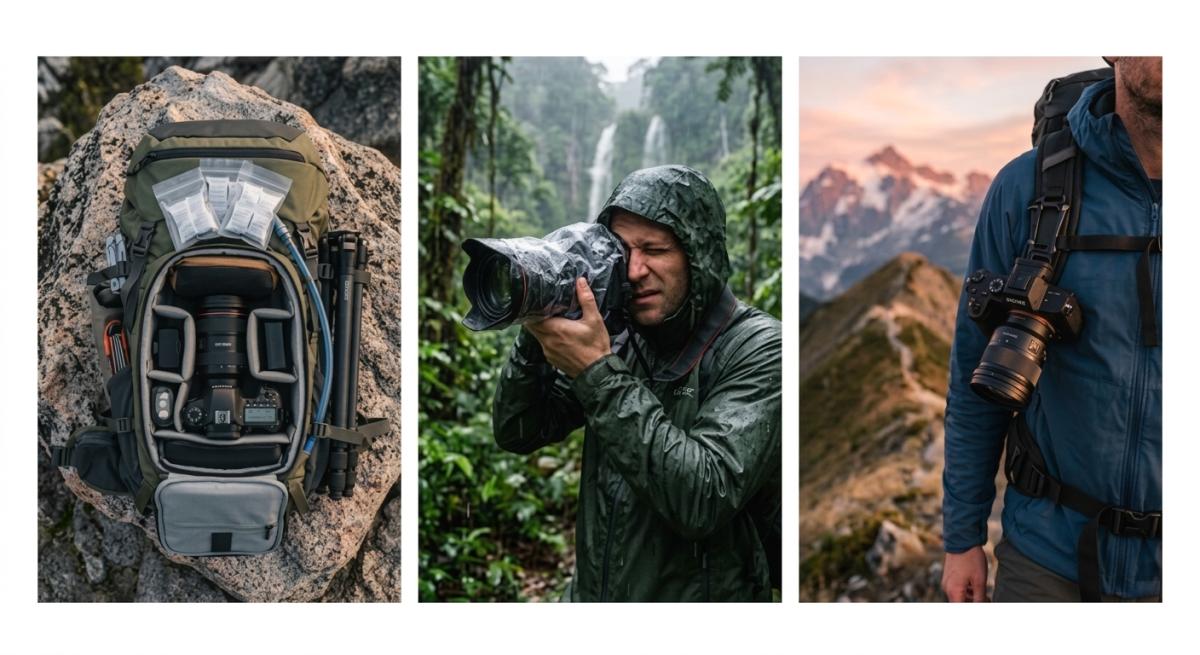
Independent waterproof pouches: Sort your gear into color-coded dry bags or nylon cases. Batteries and memory cards go in a rigid waterproof case; cables and chargers, in a lightweight bag; camera bodies and lenses, in removable padded modules (ICU - Internal Camera Units).
-
Backup redundancy without extra weight: Replace the front cap with a high-end (multi-coated) UV filter, installed permanently. If a rock hits the front lens element, it'll destroy a $50 filter instead of a $2,000 piece of glass.
-
Pre-trip maintenance: Apply a drop of dry silicone to threads and metal latches to prevent corrosion from salt air or humidity, and check that the rubber seals on weather-sealed bodies are clean and free of cracks.
2. Protection Against the Elements: Rain, Dust and Temperature
The Invisible Enemy: Dust and Sand
Dust gets into the sensor when changing lenses, or settles on the focus rings.
-
Lens-change protocol: Never change a lens outdoors if it's windy. Do it inside your backpack, under your jacket, or by putting your hands and the camera inside a clear plastic bag. Always point the camera body downward during the process.
-
Cleaning on the go: Carry a blower bulb clipped to the outside strap of your backpack. Before using a microfiber cloth, blow away the fine sand; if you rub directly, you'll scratch the glass coating.
Torrential Rain and Extreme Humidity
-
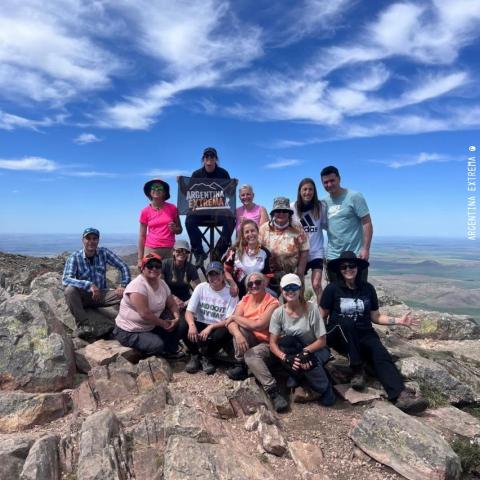
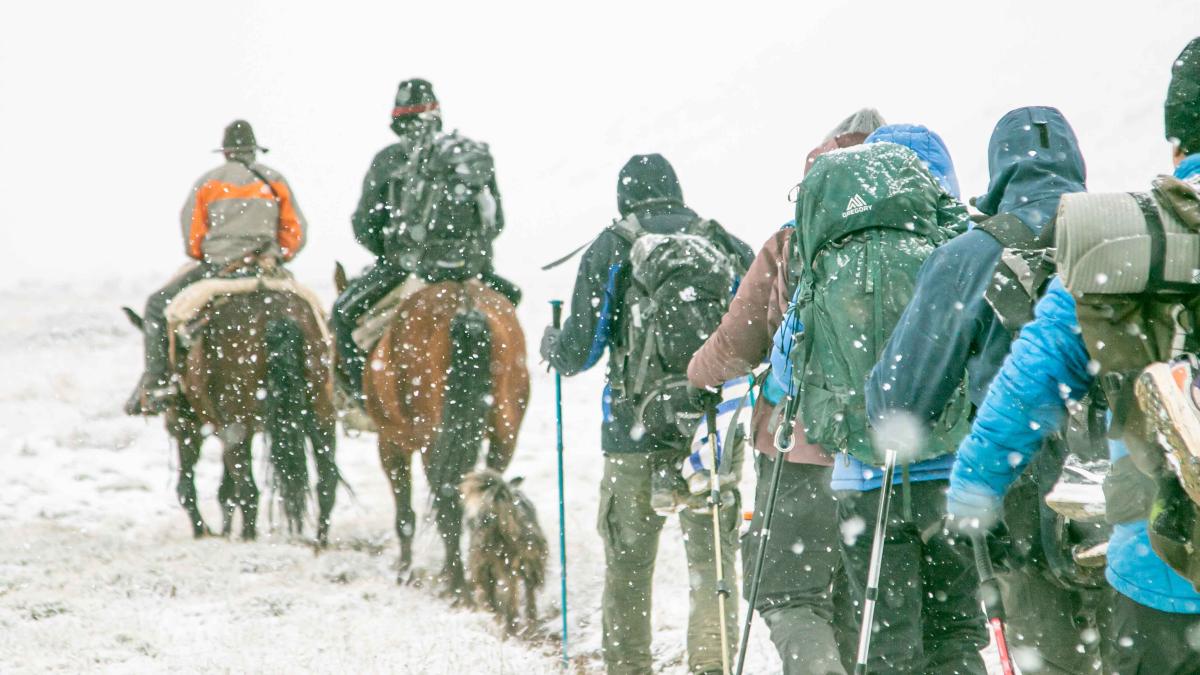
Dedicated waterproof covers: Forget improvised solutions. Use rain covers made specifically for cameras, with a clear window for the viewfinder and adjustable sleeves for your hands.
-
The giant Ziploc bag trick: For sudden temperature changes (going from extreme mountain cold into the warmth of a refuge or tent), put the camera in a sealed bag before going inside. That way, condensation forms on the outside of the bag instead of on the internal circuits or inside the lens.
-
Internal humidity control: Distribute high-capacity silica gel packets inside every gear module and dry bag.
3. The Art of Traveling Light: Professional Performance with the Least Weight
Weight kills creativity. If you're exhausted from carrying 15 kilos on your back, you'll stop raising the camera to your eye.
-
The rule of two prime lenses or two lightweight zooms:
-
Option A (Zooms): A 24-70mm f/2.8 or 24-105mm f/4 as the main lens on the body, paired with a 70-200mm f/4 (significantly lighter than the f/2.8 version).
-
Option B (Prime lenses): A light but fast 35mm and 85mm. They force you to move around, but they cut your weight in half and offer exceptional low-light performance.
-
-
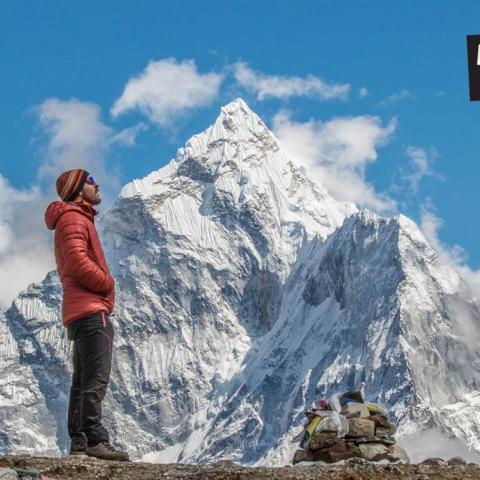
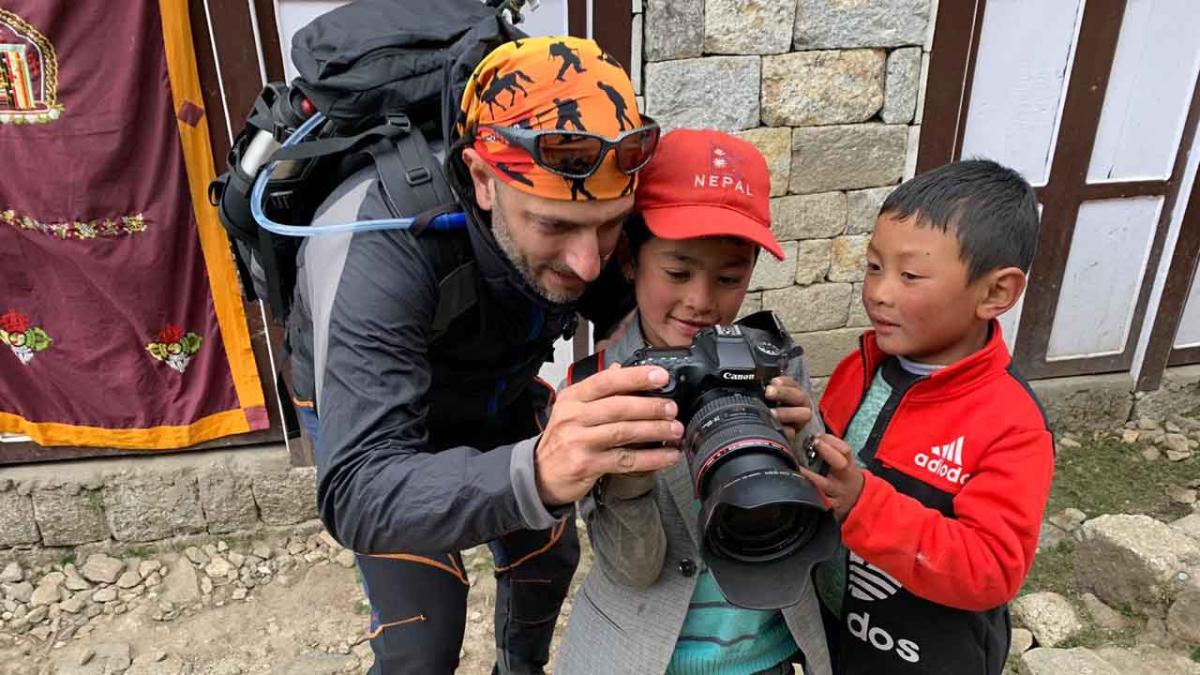
Quick access with harness clips: Use a capture clip mounted on your backpack strap or a chest harness. Keeping the camera ready on your chest distributes the weight at your body's center of gravity and keeps you from carrying it around your neck (which always leads to neck pain and unwanted muscle knots)
-
Lightweight tripod alternatives: If you need to bring a tripod, go for a carbon fiber one with no center column, to maximize rigidity and cut grams. On technical trekking routes, consider a rigid mini tripod (such as a rigid GorillaPod or an ultralight tabletop model) propped on rocks or your own backpack.
-
Optimized power: Mirrorless camera batteries suffer in the cold. Carry only as many as you need and keep spares in an inner pocket close to your body, so body heat preserves their charge. Replace individual chargers with a single ultralight dual charger with a USB-C input, so you can recharge everything directly from a power bank or a foldable solar panel.