They recommend spending time outdoors to keep the body and mind healthy. Why it's important to value contact with nature.
 Being in contact with nature has various health benefits.
While many people enjoy the adrenaline of living in a city, it's not hard to notice that even the smallest amount of contact with nature has a positive impact on wellbeing, providing a sense of relaxation and harmony. But beyond that, even if it's not obvious, green spaces have major health benefits.
The World Health Organization and a considerable amount of scientific evidence confirm that living as close as possible to nature improves health and lessens the negative effects of pollution, climate change and biodiversity loss. In addition, according to the Institute for European Environmental Policy, nature reduces stress levels and can have positive effects on physical and mental wellbeing, for example on concentration and mood.
Some of the most important health benefits:
Improves short-term memory: Apparently, spaces with trees, rivers, lakes, plants and flowers of all kinds improve brain performance. In a study led by researcher Marc G. Berman of the University of Michigan, United States, participants had to take a brief memory test and were then split into two groups.
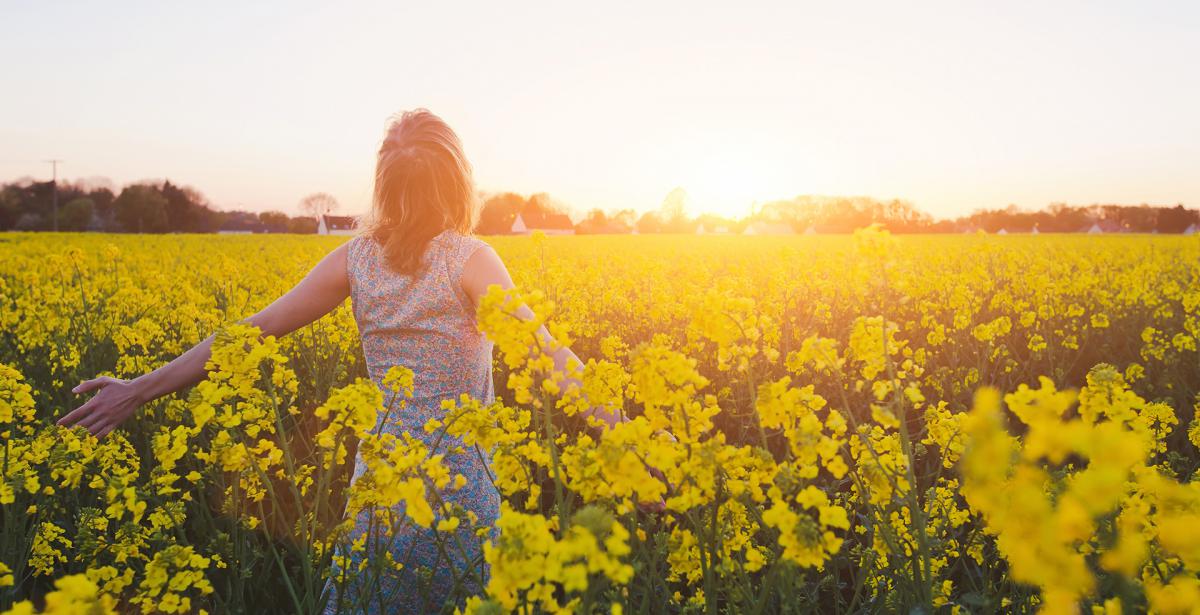
Concentration, creativity and the mind all benefit in harmony with nature.
The first group took a walk through an area full of trees, and the other took a walk down a city street. When participants came back and took the memory test again, those who had walked through the park scored almost 20 percent better than the first time. Those who had walked through the city, on the other hand, showed no consistent improvement.
Less stress: Being outdoors radically changes the physical expression of stress in the body. One study found that people who spent two nights in the forest had lower levels of cortisol, the stress hormone, compared to those who spent that time in the city.
And in another study, researchers found a decrease in heart rate and cortisol levels in people who had spent time in nature compared to those who had been in the city. Even among office workers, simply seeing nature through a window has been linked to lower stress and greater job satisfaction.

Living as close as possible to a green or natural space is highly recommended for mental health.
Fights depression and anxiety: Numerous mental health issues have also been shown to ease after time spent outdoors, especially when combined with exercise. One study specifically found that walks in the forest were associated with lower levels of anxiety and poor mood, and another found that outdoor walks could be "clinically useful as a supplement to existing treatments" for major depressive disorder. "Patients with mental illness had some of the greatest improvements in self-esteem," the study's authors concluded. In addition, the presence of water (rivers, lakes and waterfalls, for example) made the positive effects even stronger.
Lengthens life: Peter James is a researcher at the Harvard T.H. Chan School of Public Health in the United States and the author of one of the studies that concluded that women living in "greener" areas had a twelve percent lower mortality rate than those living in "less green" areas.
/s3.amazonaws.com/arc-wordpress-client-uploads/infobae-wp/wp-content/uploads/2017/10/12120309/naturaleza-3.jpg)
A study suggests that living close to nature lengthens life
The research, published in 2016 in the journal Environmental Health Perspectives, was based on tracking 108,000 women in the United States between 2000 and 2008 to analyze risk factors associated with the leading chronic diseases; among the variables analyzed was the amount of green space near their homes. After the results were published, James's team stated that "they would likely be similar had men been included in the study."
Other notable findings show that that nearby vegetation was linked to a 41 percent lower mortality rate from kidney disease, 34 percent from respiratory disease, and 13 percent from cancer. On top of that come improvements in mental health and greater opportunities for social engagement, increased physical activity, and less exposure to air pollution.
Protects eyesight: Research published in the journal Ophthalmology concluded that, at least in children, outdoor activity can have a protective effect on the eyes, reducing the risk of developing myopia. "Increasing time spent outdoors may be a simple strategy to reduce the risk of developing myopia and its progression in children and adolescents," it concluded.
/s3.amazonaws.com/arc-wordpress-client-uploads/infobae-wp/wp-content/uploads/2017/09/06175536/Felicidad02.jpg)
Contact with rivers, waterfalls and lakes makes the outdoor experience even better.
The same type of study, published in 2014, found that outdoor activities during class reduced myopia rates among children. To test it, researchers studied two nearby schools in Taiwan where myopia was equally common. They asked one school to encourage outdoor activity during recess and had the other school act as a control group. After a year, the myopia rate at the school that had promoted outdoor time was 8.41 percent, versus 17.65% in the control group.
Improves concentration: The natural environment has a powerful "restorative" effect, and one of the benefits of taking a long walk in nature is that it can restore concentration this way. So in one study, researchers went to great lengths to deplete participants' powers of concentration. They then split participants into three groups: the first went for a walk in the forest, the second through the city, and the third remained seated as a control group. When they returned, the group that had been in contact with nature got the best results on a proofreading task.
Source: ww.infobae.com.ar