Installment N°1
There are various ways we can get ourselves physically ready to take on new summit challenges or long crossings in mountain environments.
Experience tells us that the best way to be physically fit is through a daily routine that combines aerobic exercise, but above all, exercises that let us build endurance strength.
Starting from the fact that the word Endurance is defined as the ability to sustain an effort effectively for as long as possible, here are a few pointers to help you understand how to build proper endurance.
- It demands more effort from us simply because we have to carry our own body weight, which isn't the case with other aerobic exercises like swimming or cycling.
- It gives us greater endurance in less time, compared to any other activity.
- It supplies us with oxygen, and greater lung capacity.
- It allows us to produce energy — so the more oxygen that enters our body, the greater our energy and our endurance will be.
- Last but not least, for many it's an affordable form of training accessible to anyone.
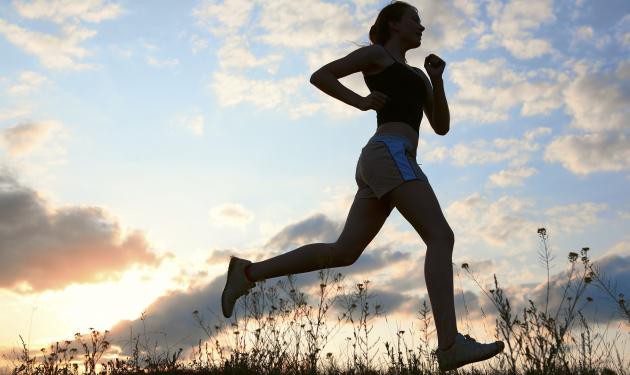
It's a proven fact that running, whether on flat ground or on slopes, even if not very steep, gives your body the strength you need to get more enjoyment out of walking in the mountains.
On the other hand, we need to strengthen our legs, and although running helps us build that strength, we also need to complement it with functional aerobic exercises.
Examples:
- Going up and down stairs with weight in a backpack. This is very simple, you just need to prepare a backpack (with a comfortable back panel), load it with 3 to 5 kilos to start, then on the stairs of your building, your house, or some park with stairs, go up and down at a steady, progressive pace with that weight on your back. The idea is to keep this up for 30 to 40 minutes, with breaks included. Once you achieve better results you can add more weight to your training, working up to 6, 8 or 10 kilos.
- Lunges, do at least 3 sets of 30 reps, holding a 3 to 5 kilo weight. The correct form is with your back straight, one leg forward bent at 90 degrees and the other back and slightly bent, alternating legs.
- Step-ups on a bench, going up and down alternating legs; this can be done holding dumbbells, adding weight with ankle weights, or with some weight in your backpack, though not too heavy, a maximum of around 5 kilos.
Traditional squats are also very effective!
Ideally, you should push yourself harder as your legs and core gain more strength. That way you'll notice how your body feels more prepared when walking through high-altitude landscapes.
That's it for some of my tips for now. Although now, it's up to you!
CHALLENGE YOURSELF AND REACH THE SUMMIT OF YOUR DREAMS!