Guide to Climbing Carabiners
What is a carabiner?
A carabiner is a metal connector with a gate that lets you join different elements: ropes, anchors, harnesses, belay devices, etc. Made of aluminum or steel, they need to be strong, functional and safe.
In this piece we'll talk about the carabiners used for climbing, distinguishing them by shape, gate and locking mechanism:
Types of carabiners by shape
- D: Very strong, aligned load (general use)
- Offset D: Lighter, wider gate opening (general use)
- Oval: Symmetrical, good for pulleys (pulleys, hauling)
- Pear-shaped (HMS): Wide gate opening, ideal for knots and belay devices (belaying, rappelling, anchor stations)
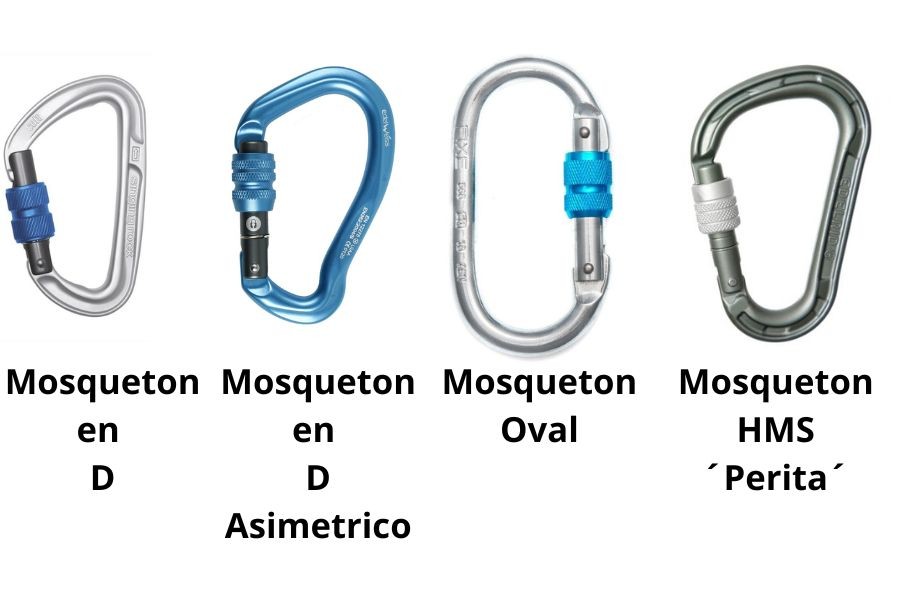
Now that we know the shape of the carabiner, let's look at the types of locking mechanisms:
By type of lock:
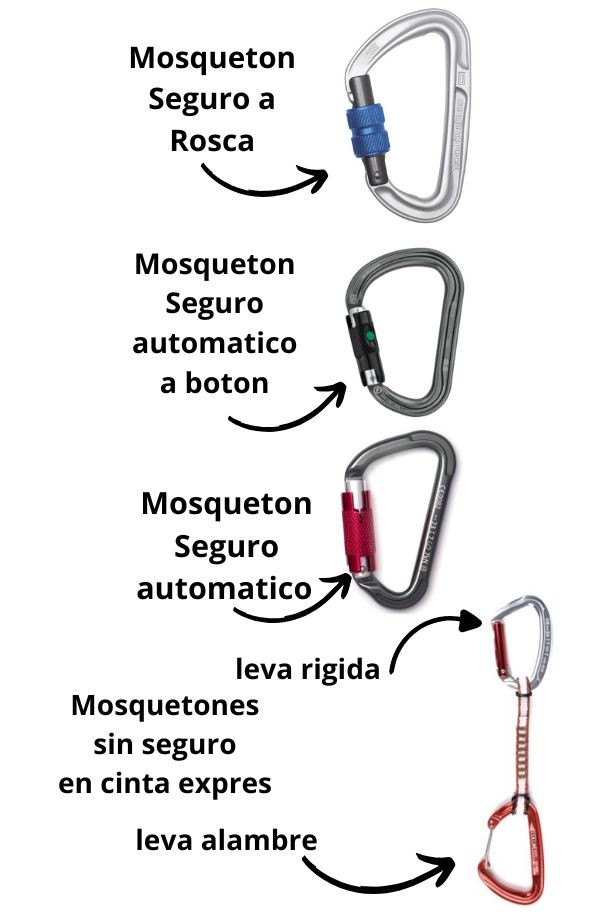 Here we find 2 major differences: non-locking and locking carabiners. The former are used in situations where quick clipping of gear onto the carabiner is needed, such as quickdraws. Those with some kind of lock are used for safety maneuvers, such as belaying a climber, anchor stations, etc.
Locking carabiners can be divided into screw-lock (manual) or auto-locking (with a closing and gate-locking system).
Among non-locking carabiners, they can be divided by the shape of the gate, which can be:
- Straight: The common ones, a straight gate for opening and easy access.
- Bent gate: Used on quickdraws for easier, more ergonomic rope clipping for the person climbing.
- Wire gate: These are the most modern, although they've actually been around for many years now. They're lighter, and hold almost as much as a solid gate. They prevent gate-flutter opening from impacts against the rock. These can't have a lock.
The Most Important Part: Certifications.
Every carabiner used for mountaineering and climbing must be certified. That guarantees the carabiner meets the safety standards for use in these high-risk sports, where life depends on the equipment. These are:
- UIAA: International standard
- CE EN 12275: European standard
These standards guarantee the minimum breaking loads for carabiners. They must be marked on the carabiner's body with the certification's initials.
Tips for use, maintenance and lifespan:
- Check your carabiners before every outing.
- Avoid impacts and dirt that could jam them.
- Store them clean and dry.
- If there's wear greater than 1mm on the body, it must be discarded.
- If it doesn't close properly, it must be discarded.
- The carabiner should always work along two forces; don't clip extra elements that pull on it sideways.
- Don't use the carabiner as a lever.
- Always check that it's properly closed and working well.
Conclusion:
This piece covers only climbing carabiners; there are many more we won't cover here so as not to add information about other activities. Whenever you're going to buy a carabiner for climbing, it has to be certified. Locking carabiners are for maneuvers, and non-locking ones are for quick rope access, like quickdraws. It's always good to take care of your gear to extend its lifespan, and to always pay attention to how it's working as wear appears. Remember that your life depends on your gear.
I hope you find this useful,
Facundo AEX - Team