The Harness: A Bit of History
The harness is a key piece of mountaineering and climbing gear, turning our body into a grip and retention system that becomes part of the safety chain.
In the early days of mountaineering and climbing, climbers tied the rope directly to their bodies using various methods. The effectiveness of these systems, especially in vertical falls, left much to be desired, leaving the climber injured. While useful for preventing serious accidents, in reality, it was better to avoid falls altogether.
The first mountaineering and climbing harness is attributed to René Desmaison, who designed a full-body model in 1959, inspired by parachuting harnesses. The first waist harness, which is the most common type today, was created in 1970 by Don Whillans for a British expedition to Annapurna.
Compared to other mountain gear like ice axes or crampons, the harness is relatively new. And yet, modern mountaineering and climbing are unthinkable without it. Improvements in the safety chain, together with the use of harnesses, have allowed sport climbing levels (as well as classic climbing and mountaineering) to reach today's limits, since they allow for safe, repeated falls.
Types of Harnesses: Standards and Practical Use by Activity. Which One Is Yours?
The standards certifying harnesses for any mountain activity are UIAA 105 and EN 12277:2015, Mountaineering and Climbing Equipment. Harnesses.
In addition to specifying that the belay loop must have a strength of 15kN, these standards classify harnesses into four types:
- Class A: Full-body.
- Class B: Full-body for children or adults up to 40 kg.
- Class C: Sit/waist harnesses.
- Class D: Chest harnesses.
It's essential to understand what these harness classes involve, since they tell us the use and type of activity they're suited for, which is essential for making an informed choice.
The most commonly used harnesses are Class C. In practice, once they meet the safety standard, these harnesses can vary depending on the specific activity they're intended for.
The harness is quite versatile. For example, a sit harness designed for alpine climbing or big walls can also be used for sport climbing. That said, there are several types of harnesses, and the main difference between them is usually determined by the standards.
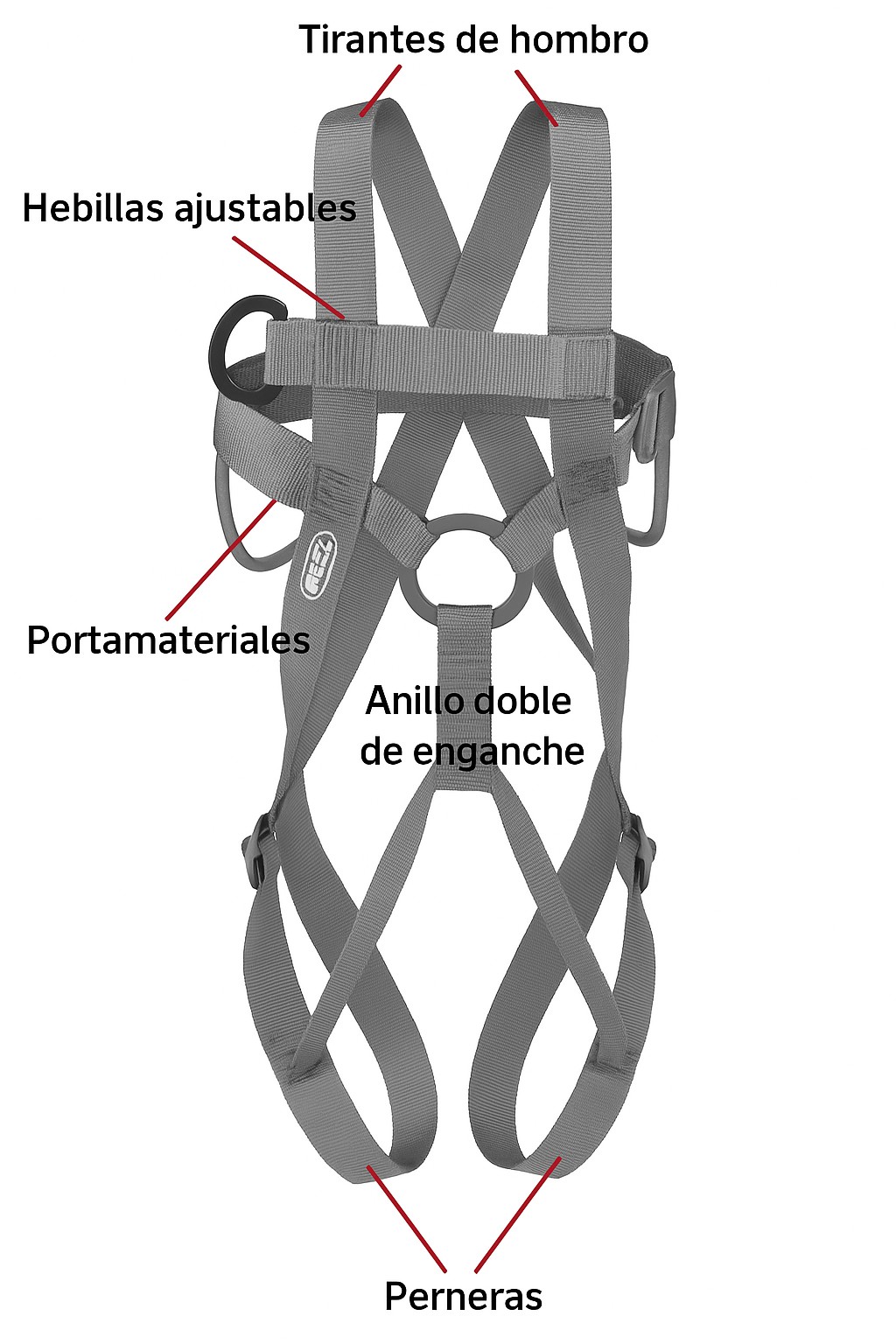 Class A
 harnesses are full-body and complete. They were the first to be developed, and many consider them the safest in case of a fall, since they distribute the impact across the whole body and keep the climber from ending up upside down. However, these harnesses restrict movement, so their use in climbing and mountaineering today is essentially nonexistent.
Class B
These are full-body, like Class A, but for children (or adults up to 40 kilos). They can't be used above that weight. The standards require a lower strength of 10 kN instead of 15 kN.
Class C
These are sit harnesses, or pelvic harnesses.
They're the most common and widely used. Depending on the activity, they'll have their own features, and can be:
- Climbing and mountaineering harnesses
- Canyoning harnesses
- Caving harnesses
Usually, except for canyoning/rappelling harnesses and caving harnesses, the differences between them aren't drastic (they tend to relate to the number of gear loops, the leg loop system, and similar things). They need to be quite comfortable.
We'll go into detail on this type, since there are several models:
1. Climbing and mountaineering harness
These are the most commonly seen harnesses:
- They have gear loops, for carrying the equipment you need on them. These don't hold much weight, so they're only used to carry gear.
- They always have an adjustable waist belt.
- They may come in sizes, but the adjustments make them fit fairly loosely.
- Leg loops can be adjustable or fixed. Fixed ones go more by size, while adjustable ones fit multiple sizes.
- They're divided between the waist belt and the leg loops, joined by the belay loop, through the harness's tie-in points.
- The tie-in point uses the harness's own anchor points redundantly.
- They have the belay loop, which is the safest point on the harness, where you work with gear and carabiners.
2. Multi-adventure or canyoning harness.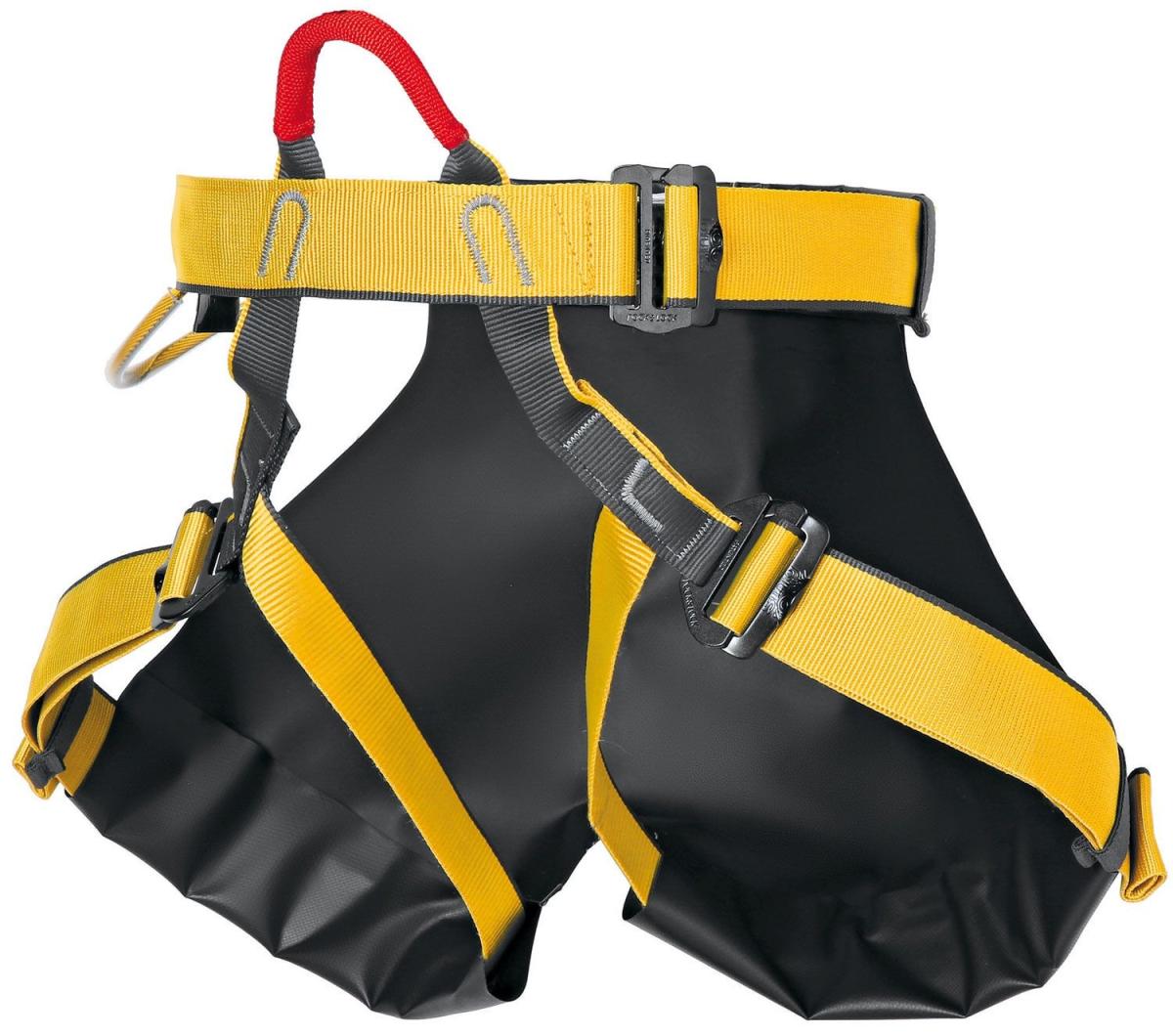
These harnesses used to be called school harnesses. They have the same strength as double-connection harnesses, they usually have thin webbing (since their function is more about support than stopping long falls), and one key feature: a single, raised belay loop.
The raised loop lets you clip carabiners in safely, and it's more comfortable when rappelling or clipping in to lower someone down. Canyoning models come with a protective seat pad to guard against wear from sliding.
3. Caving Harnesses
These are ultralight, unpadded, made of webbing. No belay loop, to avoid snagging. Their two tie-in points are low, to make them easier to use.
Class D
These are chest harnesses. They're an accessory and are always used in combination with a Class C harness, forming a full-body harness that way, for situations where this is considered necessary.
Conclusion
To sum up what we've covered above: you'll come across several types of harnesses. The most commonly used in climbing and mountaineering are Class C, the sit harnesses. Among these, there are the ones specific to mountaineering and climbing, and the multi-adventure or school ones. It's normal to see both types; if you want to buy a harness for climbing or mountaineering, you should go, on recommendation, for one of that style, since spending several hours hanging in a chest harness can be very uncomfortable.
Since a harness is always made of synthetic material, it always has a usable lifespan. This is between 5 and 10 years from manufacture. Depending on use, it can be shorter. But once that period has passed, it has to be discarded or moved to passive use (hanging weight during training), where the person isn't at risk from using gear that's past its condition.