AMS, also known as “soroche”, “puna”, is the name given to the physiological reactions of the human body in response to the low oxygen pressure that exists at altitude. As we climb, there's a progressive decrease in atmospheric pressure and also in the partial pressure of oxygen in the air we breathe.
Keep in mind: there isn't actually less oxygen at altitude than at sea level. What really varies is the atmospheric pressure. So it's not the oxygen concentration that matters, but the pressure at which it reaches the pulmonary alveoli, where gas exchange takes place with the cells responsible for picking it up, the red blood cells. The first symptoms can start appearing from 2,500-3,000 meters above sea level: headache, nausea, vomiting, vertigo, dizziness, insomnia, loss of appetite, etc.
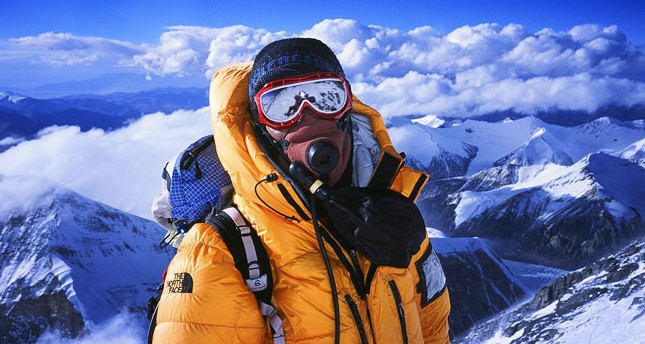
Technically it's the body's failure to adapt to hypoxia at altitude. The severity of the disorder is directly related to the speed of ascent and the altitude reached. Conversely, these symptoms usually disappear when descending to lower elevations. It rarely occurs from 2,400 meters of altitude, up to the so-called "death zone" at 7,000 meters of altitude.
It tends to appear after 6 to 10 hours of exposure to hypoxia and is more common in people under fifty and in those who normally live below 900 m in altitude.
When it comes to hypoxia, a very common mistake is thinking that the amount or concentration of atmospheric oxygen decreases with altitude. In reality the oxygen concentration is always the same (approximately 21%) regardless of the altitude reached, what decreases is the so-called partial pressure of oxygen and, with it, its bioavailability. Although hypoxia is known to be the cause of AMS, the exact mechanism by which it triggers it is still unknown.
- Dizziness
- Headache.
- Nausea and vomiting.
- Anorexia (loss of appetite).
- Physical exhaustion.
- Sleep disturbances, which can be either drowsiness or insomnia. Episodes of sudden nighttime breathlessness (waking up abruptly with a choking sensation) can also occur, caused by so-called Cheyne-Stokes breathing during sleep, this is a bad sign.
The most serious (and potentially fatal) manifestations of acute mountain sickness are High Altitude Pulmonary Edema and High Altitude Cerebral Edema.
In practical terms (in the mountains, above 2500 masl) the appearance of any of the symptoms above that can't be explained by other reasons should be considered as AMS and acted on accordingly: stop ascending and, if symptoms don't improve, descend, losing altitude as soon as possible at least down to the elevation where no symptoms were present.
Diagnosing AMS is a clinical matter, that is, based on the "general" assessment of the subject's condition since no symptom on its own can unmistakably identify AMS. Symptom tables are generally used, each one with a different score. If the total sum of points obtained exceeds a certain threshold it is considered diagnostic criteria for AMS, as well as its severity.
Of all these tables the most widely used is the so-called Lake Louise Score, which is divided into a self-assessment questionnaire (subjective) and a clinical evaluation (objective). In both the questionnaire and the clinical evaluation, the term "severe" normally means "disabling".
Fitness level or physical preparation, however excellent, does not prevent AMS at all. This can occur at elevations of as little as 2,500 m of altitude and it's known that susceptibility to it is inversely proportional to the subject's age, likely due to the maturity of the nervous system. The use of drugs to prevent AMS isn't recommended either, but rather adapting progressively to the hypoxia of altitude through a process called acclimatization.
It's very important to keep in mind that, despite scrupulously following an acclimatization schedule, AMS can occur at any time. It's also very important to stay perfectly hydrated (drink at least 4 or 5 liters of fluid daily) and follow a varied diet rich in carbohydrates.
Bibliography
- Baillie and A Simpson. . Apex (Altitude Physiology Expeditions).
- Mal de altura. Prevención y tratamiento. Javier Botella de Maglia. Ediciones Desnivel.