In the life of the adventurer, the expedition member, the mountaineer, or anyone who simply needs to cross ground no vehicle can reach, the backpack plays a leading role. This isn't, in this delightful case, the bag we carry every day, weighed down with tense, senseless situations, in the unfortunate daily grind that swallows everything up. This is our true inseparable companion on every adventure we set out on toward a new horizon, in the relentless pursuit of that wonderfully captivating, indescribable well-being that trips fed by nature turn out to be. The pack, the old faithful pack. The one that marks and punishes our back after too many hours of nonstop walking over rolling terrain. The one that holds everything. The one that draws out both our smiles and our tears. The inseparable companion that lights our path forward as we always look for one more step. Learning to understand it, drawing ever closer to its spirit, so full of nomadic emotions, is a way of giving our cherished, much-punished bodies a more frequent and much-needed break.
Choosing the right backpack is no easy task. In this article we'll try to give you as many tools as possible so you can make the best decision.
You can check out our article on recommended backpacks for women: CLICK HERE
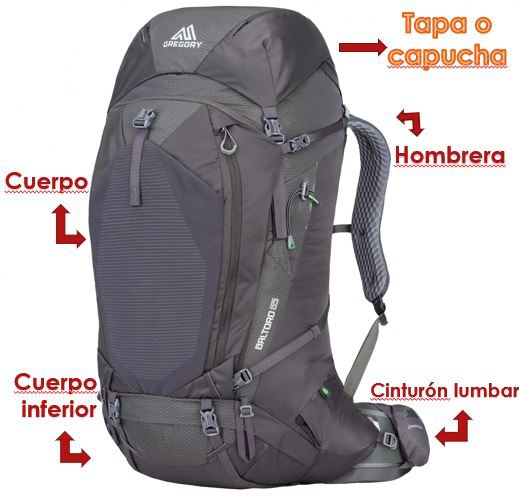 Lid or hood: has zippers (on the outside and the inside). It can be removable, so it doubles as a small daypack, or it can be fixed in place. Removable lids have expansion straps, which give the backpack extra “hidden” capacity.
Haul loop: Used to lift the backpack. Located at the top of the back panel.
Shoulder straps: the two large straps that go over our shoulders. There are differences between men's and women's versions. Depending on how the straps and hip belt are adjusted, they transfer more or less weight off the shoulders.
Load-lifter straps: let you pull the top of the backpack in closer to your body.
Back panel: nowadays almost all are adjustable, padded and many of them ventilated (with air channels).
Internal stays: These give it its anatomical shape. They can often be removed and used for other purposes.
Sternum strap: On some models the height is adjustable (essential for women)
Lower shoulder-strap adjusters: every backpack has them. They should always be adjusted with the pack on.
Hip belt: Essential on any backpack, and especially its adjustment.
Divider zipper between the two compartments: some packs don't have one. There's also an internal zipper on some models.
Finger loops: used to temporarily change how your arms sit. Not every pack has them.
Separate pockets: these can be side pockets, with or without zippers.
Gear loops: the straps attached to the backpack for carrying other equipment (trekking poles, ice axes, crampons, sleeping pad, etc)
1- Competition / Adventure Racing packs
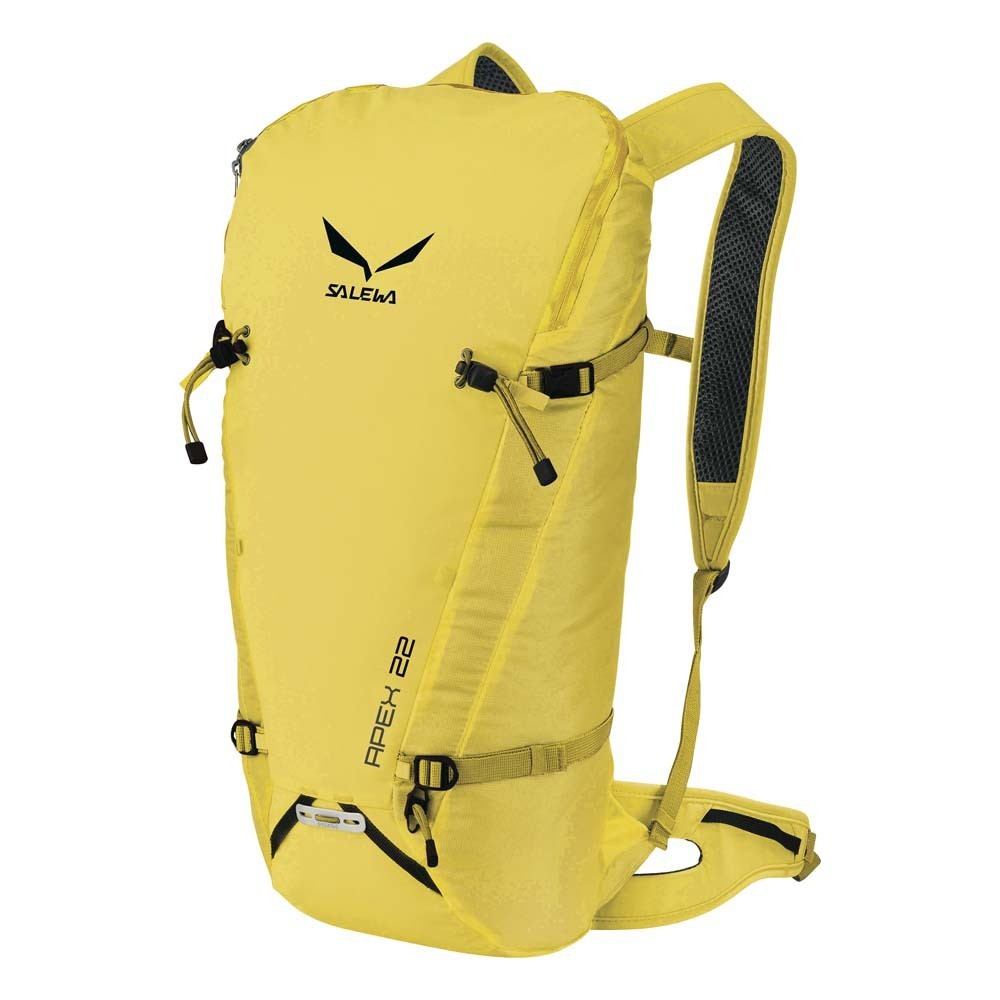
Uses: Running / trail running / cross country / Mountain Bike / Adventure racing in general.
Typical capacity: 10 to 20 liters
Description: designed for hydration and light loads, the kind normally allowed in some races.
Comments: These packs are only good for races or short outings. They generally don't have room to carry a jacket. They're not recommended even for short hikes because they lack the capacity and are uncomfortable for that kind of use.
2- Small single-compartment packs with no lid
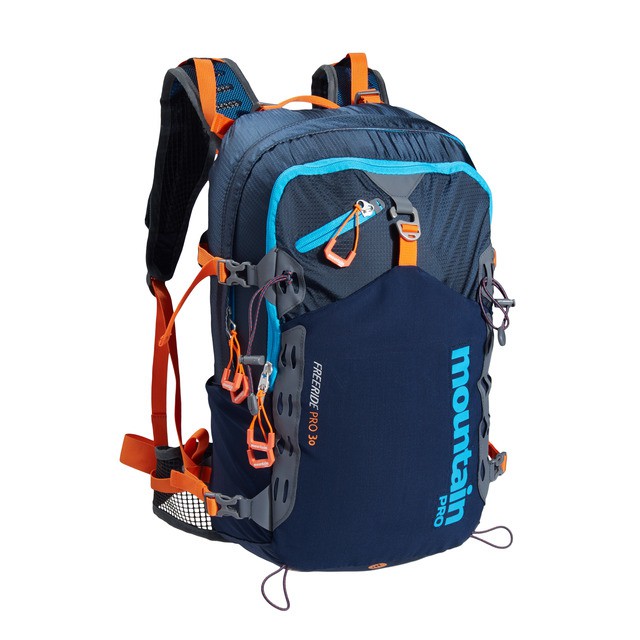
Uses: handy for travel (as carry-on luggage), for single-day outings, for light hiking or short half-day to full-day trekking. Some models are mainly designed for office use, carrying things like folders, books and laptops.
Typical capacity: 20 to 35 liters.
Description: These are compact and usually rectangular and vertical in shape. They have a circular zipper, normally in two separate, parallel compartments; useful for travel, single-day outings, light hiking or short half-day to full-day trekking.
Comments: They're not the best choice for hiking or trekking since their design doesn't give them the capacity needed to carry mountain gear or clothing. Many of them lack a waist adjustment strap, key for taking weight off your shoulders.
3- Small single-compartment packs with a lid
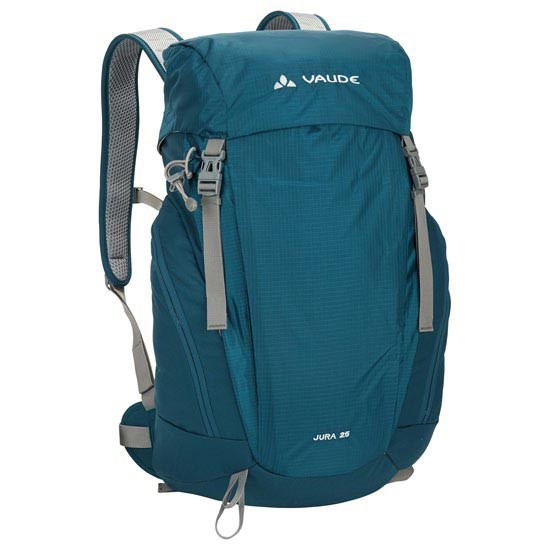
Uses: for short treks or two-day trips with an overnight stay at a refuge. They're also used as carry-on bags when traveling or as a second pack on long expeditions and multi-day trips.
Typical capacity: 30 to 45 liters.
Description: Shaped much like the large trekking and expedition packs but without the lower compartment. They attach via a buckle that joins the lid to the body. The lid can be fixed or independent (able to detach and be used separately from the body, something usually found on expedition or multi-day packs). Some models fall outside this capacity range, either below 30 or above 45 liters.
Comments: For best performance they need all their adjustment straps, the hip belt, the shoulder straps and the ones at the top, around the lid. They're the best choice for full-day treks or climbs, out and back to camp, a refuge or home. Plenty of people, thinking or knowing they can't carry much, use them for multi-day trips, but that's not the best idea. It's always better to have a pack with more capacity and simply not load it as heavily, while still fitting it properly.
4- Small single-compartment technical packs with a lid
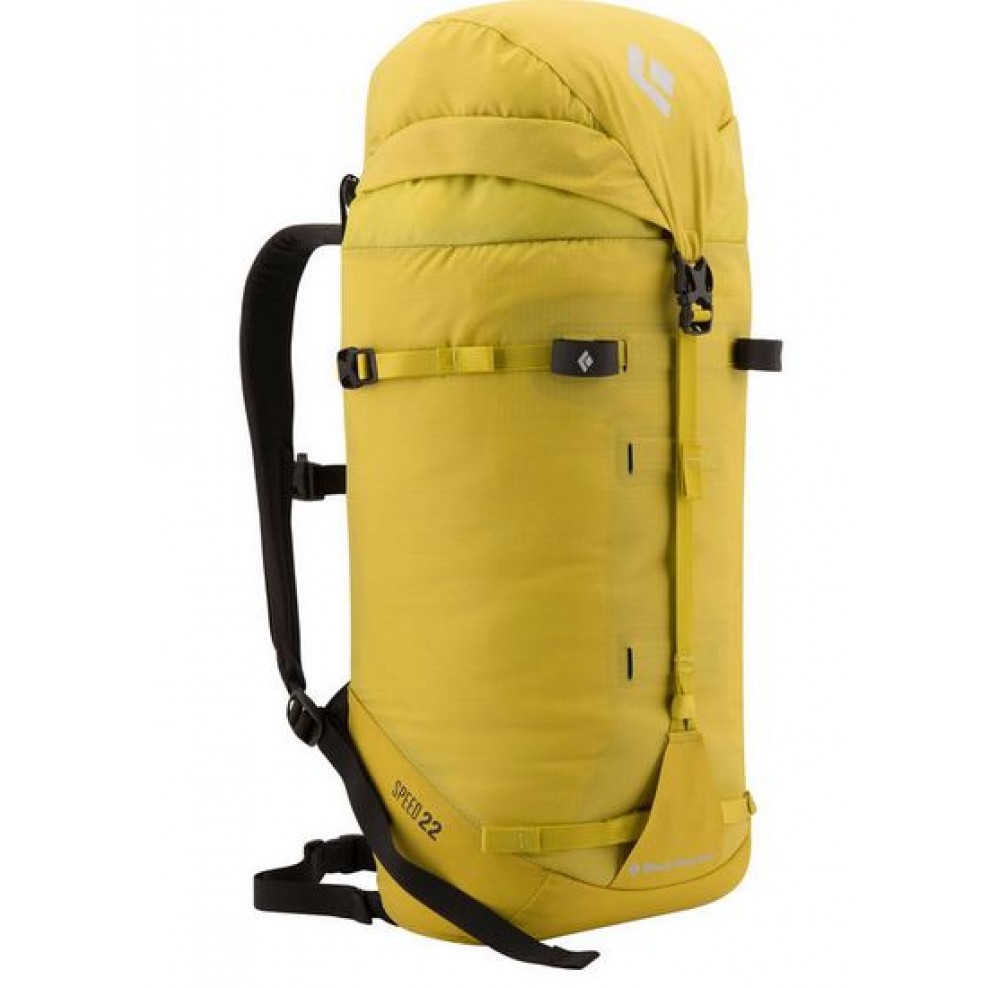
Uses: for fast, technical climbs.
Typical capacity: 20 to 40 liters.
Description: Similar to the previous type, but more tube-shaped in this case (to avoid throwing you off balance on a wall) and fitted with attachments for technical gear such as crampons, ice axes, a helmet, etc. Some also have just a single front strap to attach the lid to the body.
Comments: They come in several structural variations. They're not recommended for trekkers because they offer fewer conveniences in terms of pockets and compartments. As with the previous type, some people who can't or don't want to carry much weight also choose these for multi-day trips, but as we've mentioned and keep repeating, that's not the best idea. It's always better to have a pack with more capacity and simply not load it as heavily, while still fitting it properly.
5- Multi-day Trekking or Expedition packs
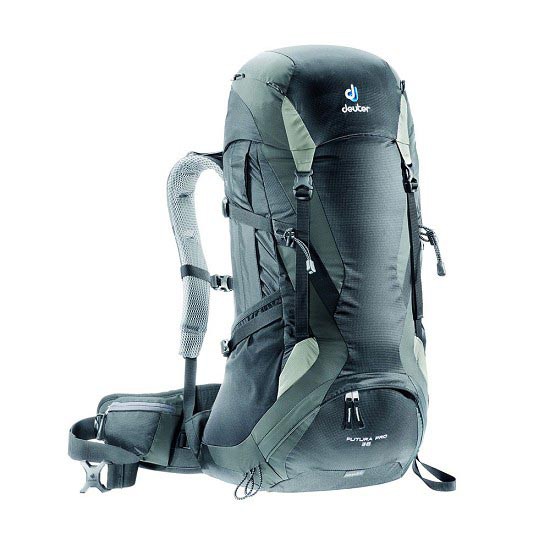
Uses: for multi-day trips, heavy loads, or major expeditions.
Typical capacity: 55 to 90 liters.
Description: They have two compartments, usually separated by a horizontal zipper for the lower section, which can also be divided from the inside by a zipper or by fabric or mesh dividers. These are the large packs you see in mountain gear shops.
Comments: These packs used to have an external frame with iron bars to support their structure. Nowadays, and for more than 30 years now, they're built with an internal frame, long, laminated stays or compact frame sheets, but always inside the pack and set against the back panel.
These packs are the best choice not only for long trips, but also for two-day outings. For example, to climb Tres Picos in Sierra de la Ventana with an overnight camp, you need this type of pack, since you'll be carrying shared group gear such as food, cooking equipment and the tent.
- It shouldn't be smaller than 60 liters for women and 65/70 liters for men
- Try it on again and again, ideally loaded with at least 10 kg, to adjust it properly and get a feel for how it moves with you.
- With the pack fully loaded and the hip belt properly tightened (shifting the weight onto your legs) there should be a small gap left between the shoulder straps and your shoulders, so they don't bear too much of the load (if there's too much gap and you've already adjusted the back panel to its max, the pack is too big for you)
- It shouldn't have side pockets that stick out.
- It should have two clearly separate compartments, upper and lower, divided by an external and an internal zipper.
- The hip belt should be wide and padded.
- On the sides, it should have room to hold trekking poles or a sleeping pad, along with adjustment straps.
- Ideally the lid shouldn't be fixed; it should extend with rear straps, to increase capacity.
- The back panel should be adjustable, to fit our body according to the weight we're carrying or the activity to be done.
- It's worth the effort and not just going by what's easiest on your wallet. A good pack, even a pricey one, will last many years and you'll never regret it. Rather than buy something that will hurt you just because it was cheaper, it's better to buy nothing at all and wait for a better moment.
Recommended national brands: Fugate, Huemul, Makalu, Outside, Doite.
Recommended imported brands: Ferrino, Millet, Vaude, Gregory, Deuter, Arcteryx, Mammut, Lowe Alpine, Berghaus, Marmot, Black Diamond, Osprey, Marmot, The North Face.